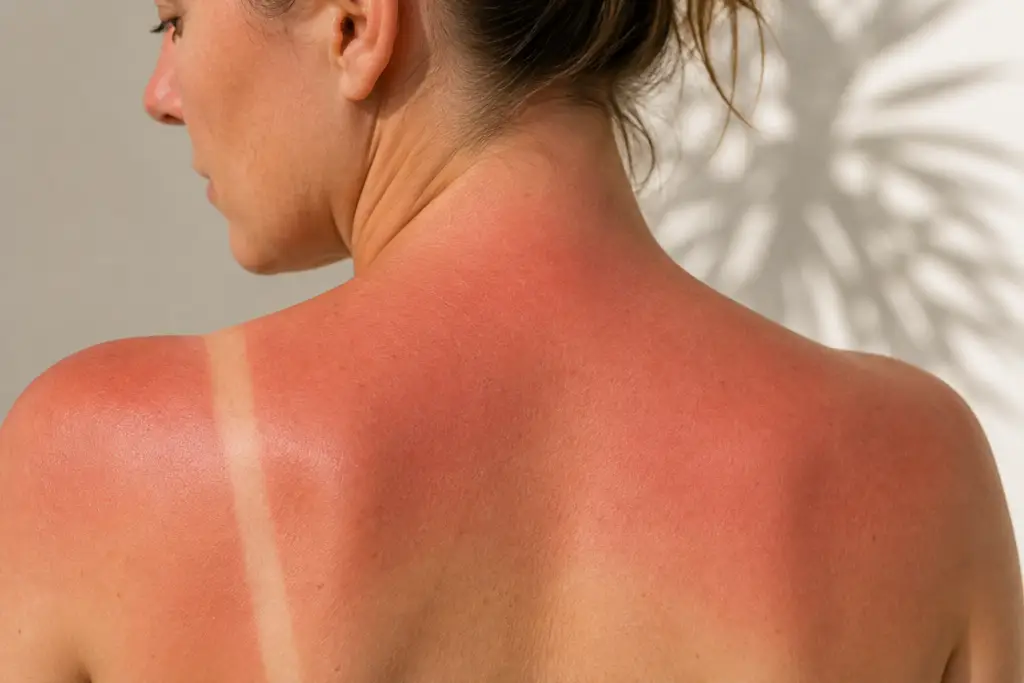
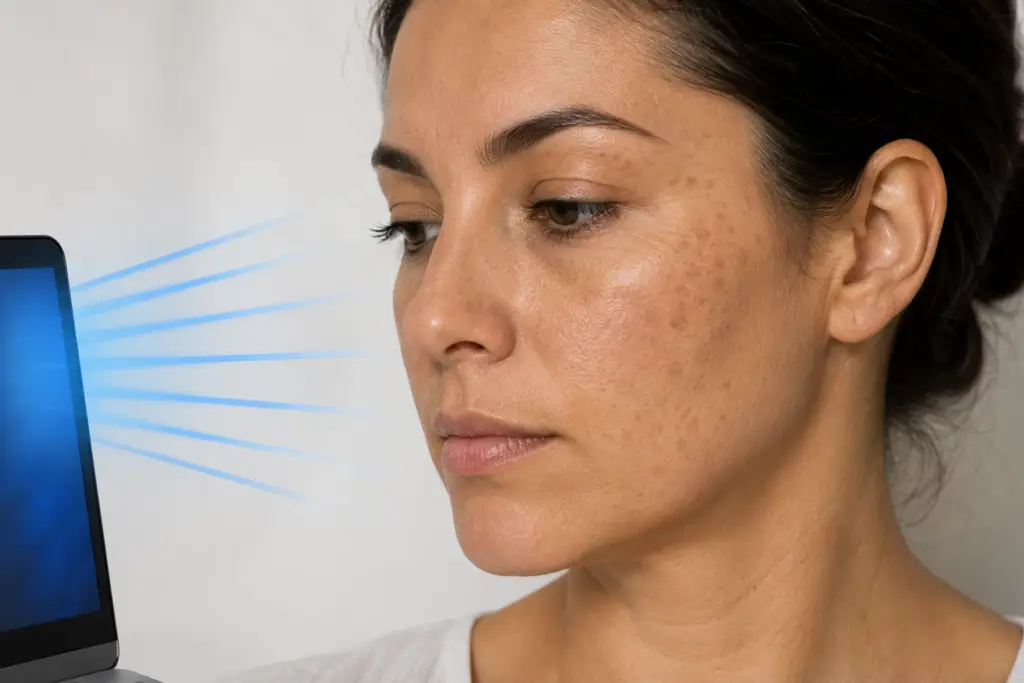
July is UV Awareness Month, making it the perfect time to talk about something many of us use every day but don’t always think much about—sunscreen. Most people know sunscreen helps prevent sunburn, but that’s only part of the story. Every day, your skin is exposed to different types of light, and not all of them affect your skin in the same way. Some come directly from the sun, while others are part of the visible light spectrum that surrounds us throughout the day. Understanding those differences can help you make better choices for your skin now and in the future.
You have probably heard terms like UVA, UVB, and blue light, but unless you’ve spent time researching skincare, it’s easy to assume they all mean the same thing. In reality, each one affects your skin differently. Some contribute to premature aging, others are responsible for sunburn, and some are still being actively studied for their effects on skin pigmentation and overall skin health. Learning how each one works is the first step toward choosing a sunscreen that provides the protection your skin actually needs.
This conversation has become even more relevant with the recent approval of Bemotrizinol (BEMT), also known as Parsol® Shield, by the U.S. Food and Drug Administration (FDA). Although this ingredient has been used in sunscreens around the world for many years, its approval in the United States gives consumers access to another advanced option for broad-spectrum UV protection. Before we look at why that’s exciting news, let’s first understand what your skin is protecting itself against every day.
What Are UVA Rays?
When most people think about sun damage, they usually picture a painful sunburn after spending too much time outside. Surprisingly, the rays responsible for many visible signs of skin aging are not always the ones that leave your skin feeling red or sore.
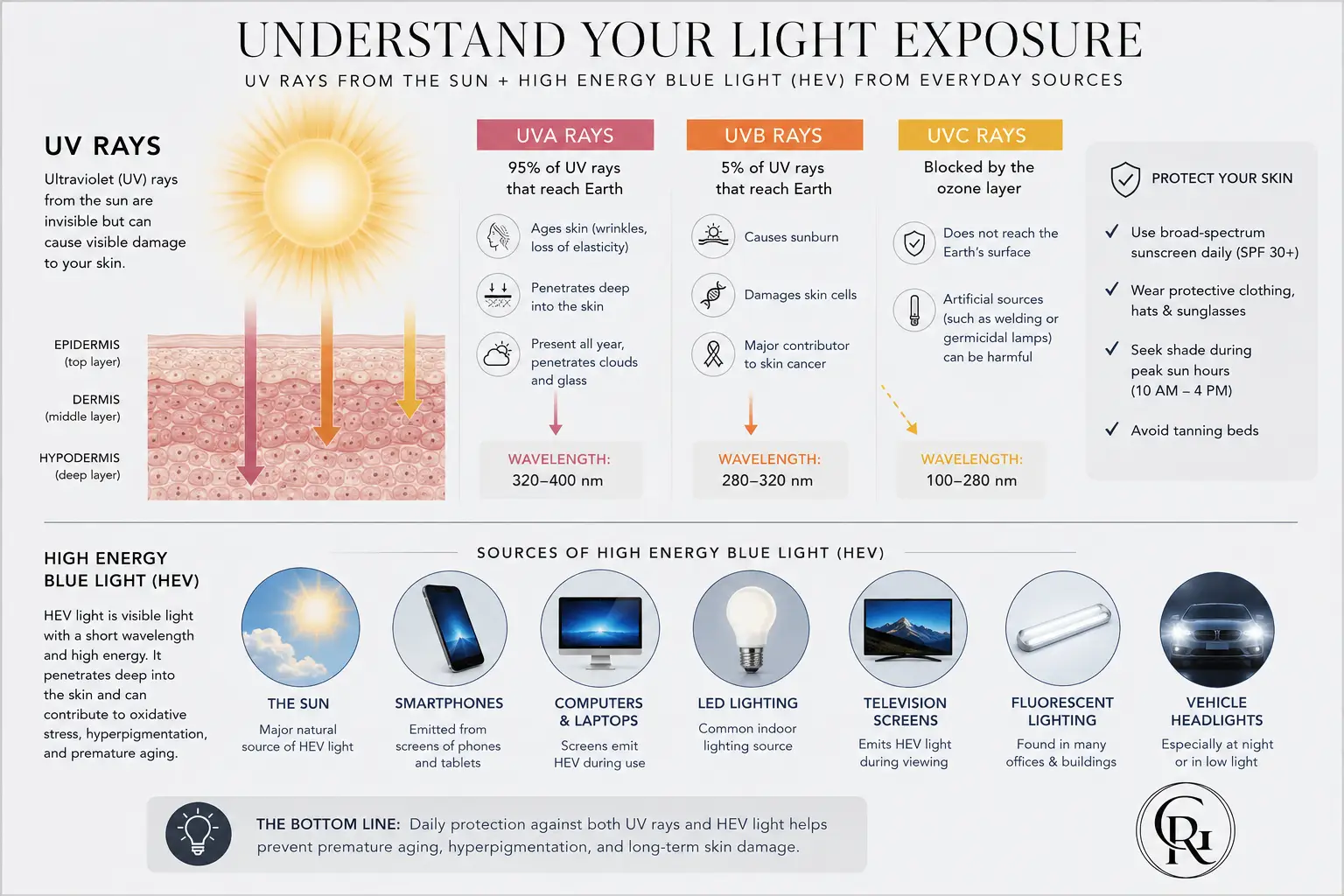
UVA rays make up approximately 95% of the ultraviolet radiation that reaches the Earth’s surface. They are present throughout the year and remain relatively constant from morning to evening, even on cloudy days. Unlike UVB rays, UVA rays can also pass through window glass. That means your skin may still be exposed while you’re driving, sitting near a sunny office window, or relaxing at home beside a large window.
One reason UVA rays receive so much attention is because they penetrate deeper into the skin, reaching the layers where collagen and elastin are found. These proteins help keep skin firm, smooth, and youthful. Over time, repeated exposure to UVA rays can contribute to wrinkles, fine lines, sagging skin, uneven pigmentation, and dark spots. This process is commonly known as photoaging, which simply refers to skin aging caused by ultraviolet exposure rather than natural aging alone.
UVA exposure has also been linked to an increased risk of skin cancer. Because the damage happens gradually over many years, you usually don’t notice it while it’s occurring. Your skin may never become red or uncomfortable, yet changes are taking place beneath the surface each time you’re exposed.
What Are UVB Rays?
UVB rays behave quite differently from UVA rays.
These are the rays most people associate with spending too much time outdoors because they are the primary cause of sunburn. If you’ve ever spent an afternoon at the beach without sunscreen and ended the day with red, tender skin, UVB rays were most likely responsible.
Unlike UVA rays, UVB rays mainly affect the outer layers of the skin. Their intensity changes depending on the season, time of day, and where you live. They are generally strongest around midday, when the sun is highest in the sky.
Although UVB rays don’t penetrate as deeply into the skin, they can still damage the DNA inside skin cells. Repeated exposure over time increases the risk of skin cancer, including melanoma, one of the most serious forms of skin cancer.
This is where SPF becomes important. SPF, or Sun Protection Factor, measures how well a sunscreen protects against UVB rays. However, SPF doesn’t tell you how much protection you’re getting against UVA rays. That’s why dermatologists recommend choosing a broad-spectrum sunscreen, which helps protect against both.
What Is High-Energy Visible (HEV) Blue Light?
Blue light has become one of the most talked-about topics in skincare over the past few years. Many people know it comes from phones, computers, and tablets, but what surprises most people is that the sun is actually the largest source of blue light we experience every day.
High-Energy Visible (HEV) blue light is different from ultraviolet radiation because it’s part of the visible light spectrum. While digital devices emit much smaller amounts than the sun, many of us spend several hours each day looking at computer screens, smartphones, and other electronic devices. Because of that, researchers have become increasingly interested in understanding how prolonged blue light exposure may affect the skin.
Current research suggests that HEV blue light may contribute to oxidative stress and pigmentation, particularly in individuals with darker skin tones or those prone to conditions such as melasma. Scientists continue to study this area, but the available evidence has encouraged skincare companies to develop products that offer protection beyond traditional UVA and UVB coverage.
Because of these findings, some newer sunscreens are formulated to help protect not only against UVA and UVB rays but also against high-energy visible (HEV) blue light. This added protection often comes from ingredients such as iron oxides, which provide the tint found in many tinted sunscreens, and micro-fine titanium dioxide, which helps reflect portions of visible light. Some formulations also include antioxidants such as Vitamin C, Vitamin E, and niacinamide, which help defend the skin against oxidative stress caused by environmental exposure. This combination can be especially beneficial for people who spend long hours outdoors, work in front of digital screens, or are managing concerns such as melasma, hyperpigmentation, or uneven skin tone.
UVA vs. UVB vs. Blue Light: What’s the Difference?
Now that we’ve looked at each type individually, the differences become much easier to understand.
| Type | Main Source | How It Affects the Skin |
| UVA | The Sun | Penetrates deep into the skin and contributes to premature aging, wrinkles, pigmentation changes, and increased skin cancer risk. |
| UVB | The Sun | Primarily affects the outer layer of the skin, causes sunburn, and increases skin cancer risk. |
| HEV Blue Light | The Sun Electronic Devices (TV, Smartphone, Computer, Laptop) LED Light Bulbs Fluorescent Light Bulbs Vehicle Headlights |
May contribute to oxidative stress and pigmentation, particularly in susceptible individuals. Research is still ongoing. |
The important thing to remember is that your skin isn’t exposed to just one of these. Every day, it’s exposed to a combination of environmental factors. That’s why choosing a sunscreen that provides broad-spectrum protection has become such an important part of maintaining healthy skin.
Why Broad-Spectrum Protection Matters
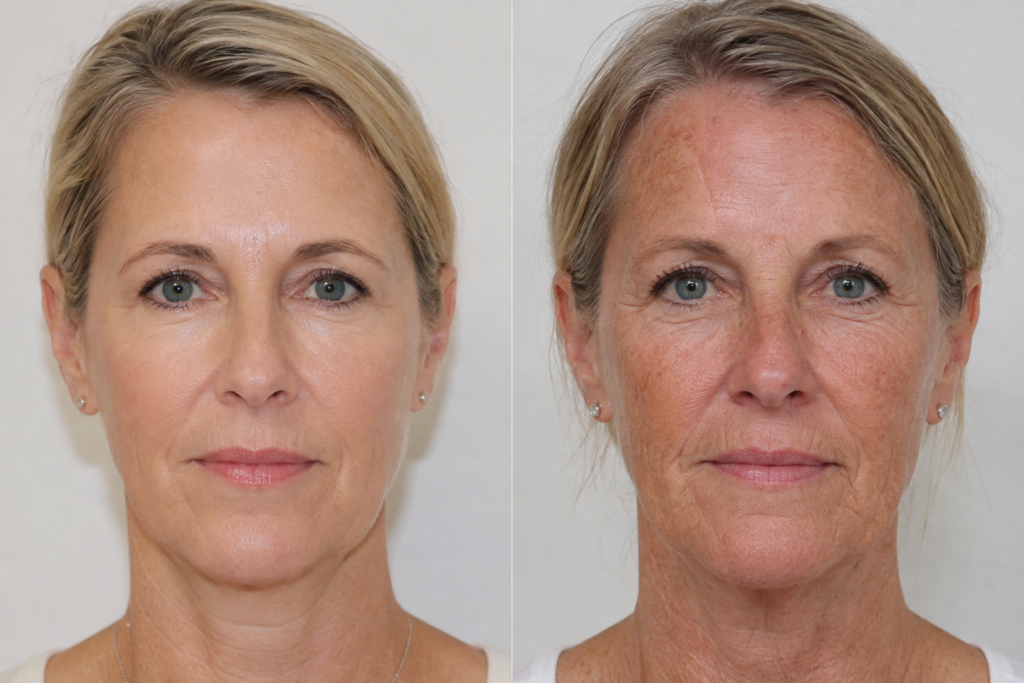
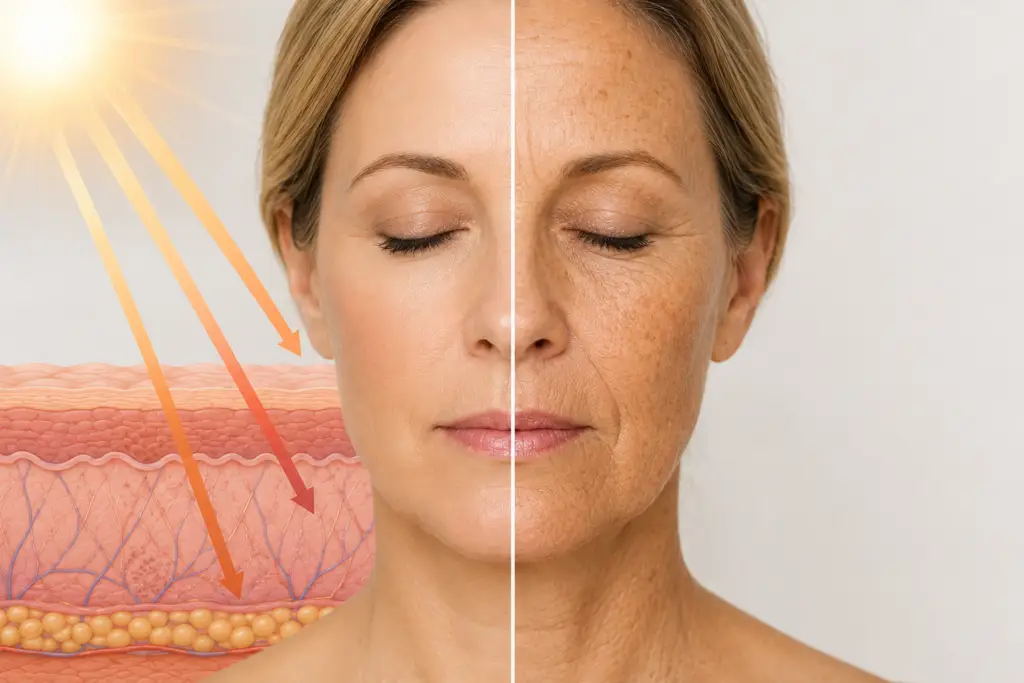
Photo showing photoaging effects of UVA, UVB, and HEV Blue Light on the skin
Many people still choose sunscreen based only on SPF, but SPF is just one part of the equation. While it tells you how well a sunscreen protects against UVB rays, it doesn’t measure protection against UVA rays, which are responsible for many of the visible signs of premature skin aging.
Choosing a broad-spectrum sunscreen helps ensure you’re protecting your skin against both UVA and UVB rays. If you’re concerned about pigmentation or spend long hours outdoors or in front of digital screens, you may also want to consider products that include ingredients that help defend against HEV blue light.
When shopping for sunscreen, look for products that:
-
- Provide broad-spectrum protection against both UVA and UVB rays.
-
- Have an SPF of 30 or higher for everyday use.
-
- Feel comfortable enough that you’ll actually wear them every day.
-
- Match your skin type, whether your skin is oily, dry, sensitive, acne-prone, or combination.
-
- Contain ingredients that help protect against HEV blue light, such as iron oxides, micro-fine titanium dioxide, or antioxidant-rich ingredients like Vitamin C, Vitamin E, and niacinamide, especially if you’re concerned about pigmentation or spend long hours in front of digital screens.
The best sunscreen isn’t necessarily the one with the highest SPF. It’s the one you’ll enjoy wearing every day because consistency is what makes the biggest difference.
The New FDA-Approved Sunscreen Ingredient: Bemotrizinol (BEMT)
If you’ve been following skincare news recently, you’ve probably heard about Bemotrizinol, also known as BEMT or Parsol® Shield.
Although it’s new to the United States, Bemotrizinol isn’t a new ingredient. Dermatologists and skincare professionals in Europe, Australia, and many other countries have trusted sunscreens containing Bemotrizinol for years because of their excellent safety profile and broad-spectrum UV protection.
In 2026, the U.S. Food and Drug Administration (FDA) approved Bemotrizinol for use in sunscreen products, marking one of the most significant advances in sunscreen ingredients in nearly twenty years.
One of the reasons dermatologists are excited about Bemotrizinol is that it provides excellent broad-spectrum protection against both UVA and UVB rays while remaining highly photostable. In simple terms, that means it continues working effectively even after prolonged exposure to sunlight instead of breaking down quickly. Although Bemotrizinol has been used safely in many countries for years, its FDA approval gives patients in the United States access to another advanced sunscreen ingredient that can strengthen daily sun protection.
At River Oaks Galleria Medspa, we believe choosing the right sunscreen is just as important as remembering to wear one. Different skin types have different needs, which is why we carry several dermatologist-recommended sunscreen brands instead of taking a one-size-fits-all approach. Whether your skin is oily, dry, acne-prone, sensitive, or prone to pigmentation, there’s a professional sunscreen formulated to help meet your needs.
Choosing the Right Sunscreen for Your Skin
Walking down the sunscreen aisle can feel overwhelming. There are mineral sunscreens, chemical sunscreens, tinted formulas, untinted formulas, lotions, creams, gels, and dozens of SPF options. With so many choices, it’s easy to wonder which one is actually right for your skin.
The truth is, there isn’t a single sunscreen that’s perfect for everyone. Someone with dry skin may need a more hydrating formula, while someone with oily or acne-prone skin may prefer something lightweight that won’t clog pores. If you have sensitive skin or struggle with pigmentation, the ingredients in your sunscreen can make just as much difference as the SPF itself.
Instead of focusing on the brand name first, think about your skin’s needs. Look for a sunscreen that provides broad-spectrum protection, feels comfortable enough that you’ll wear it every day, and fits naturally into your skincare routine. The best sunscreen isn’t simply the one with the highest SPF—it’s the one you’ll actually use consistently.
At River Oaks Galleria Medspa, we carry several dermatologist-recommended sunscreens because different patients have different skin concerns. Whether you’re looking for an everyday sunscreen, a hydrating formula, a tinted mineral sunscreen, or advanced environmental protection, we can help you find a product that’s right for you.
| Professional Sunscreen | Best For / Description | Price |
|---|---|---|
|
Face Reality Daily SPF 30+ |
A lightweight, broad-spectrum sunscreen that’s comfortable enough for everyday wear. Its non-greasy formula absorbs easily, making it suitable for daily use under makeup or as the final step in your morning skincare routine. It provides broad-spectrum protection without feeling heavy, making it a great choice for patients who simply want a reliable sunscreen they’ll enjoy wearing every day. | $36 |
|
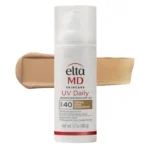
EltaMD UV Daily SPF 40 |
Formulated with hyaluronic acid, making it an excellent choice for normal, dry, or sensitive skin. It provides lightweight hydration while protecting against UVA and UVB rays. Many patients choose this formula because it feels comfortable throughout the day and layers well under makeup without feeling greasy. Available in: Untinted ($45), Medium Tint ($47), and Deep Tint ($47). | Starting at $45 |
|
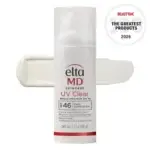
EltaMD UV Clear SPF 46 |
One of our most popular recommendations for oily, acne-prone, or sensitive skin. It’s formulated with niacinamide, which helps support the skin barrier while improving the appearance of redness and uneven skin tone. Because of its lightweight texture, many patients who normally dislike sunscreen find this formula comfortable enough to wear every day. Available in: Untinted ($46), Medium Tint ($48), and Deep Tint ($48). | Starting at $46 |
|
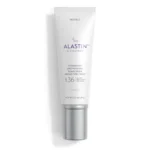
Alastin HydraTint Pro Mineral SPF 36 |
A tinted mineral sunscreen that helps even skin tone while delivering broad-spectrum UV protection. It’s an excellent option for patients who want light cosmetic coverage without applying a full face of makeup. The tinted formula also contains iron oxides, which can help provide additional protection against high-energy visible blue light. | $79 |
|
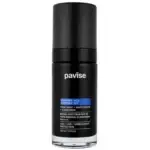
Pavise Dynamic Age Defense SPF |
Not your typical sunscreen. In addition to broad-spectrum UV protection, it’s formulated with advanced skincare technology designed to help defend against environmental stressors that contribute to visible skin aging. It’s an excellent option for patients who want daily sun protection while also supporting a long-term healthy aging skincare routine. | $112 |
Sunscreen Only Works If You Wear It
One of the biggest mistakes people make is thinking sunscreen is only necessary on beach days or during the summer. In reality, your skin is exposed to ultraviolet radiation much more often than most people realize. Driving to work, walking the dog, eating lunch outside, exercising, or simply sitting near a sunny window all contribute to your lifetime UV exposure.
Making sunscreen part of your morning routine is one of the simplest things you can do to help protect your skin. It only takes a minute or two to apply, but that small habit can help reduce premature aging, uneven pigmentation, and long-term sun damage over time.
Remember that sunscreen isn’t a one-and-done product. If you’re spending extended time outdoors, dermatologists recommend reapplying it approximately every two hours, or more often if you’re swimming or sweating.
Protect Your Skin Every Day
Healthy skin isn’t just about treating damage after it happens. It’s about protecting your skin before damage has a chance to occur. Understanding the differences between UVA rays, UVB rays, and high-energy visible blue light can help you make better choices about the products you use every day. As sunscreen technology continues to evolve, ingredients like Bemotrizinol (BEMT) are giving patients even more options for comprehensive daily UV protection.
At River Oaks Galleria Medspa, we carefully select professional sunscreen products that address a variety of skin types and skincare concerns. Whether you’re looking for a lightweight everyday sunscreen, a hydrating formula, a tinted mineral sunscreen, or advanced environmental protection, our team can help you choose the product that’s best suited to your skin.
Browse our complete sunscreen collection on our store or visit River Oaks Galleria Medspa to find the sunscreen that best fits your skin type, lifestyle, and skincare goals.
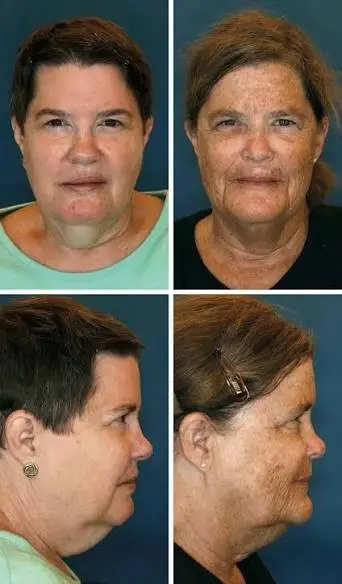
This image comes from a 2009 twin study that compared how the skin ages when one twin consistently wears sunscreen and the other does not. Even though the twins shared the same genetics, the twin with greater lifetime sun exposure and less consistent sunscreen use developed noticeably more wrinkles, uneven pigmentation, and visible signs of premature skin aging. The study serves as a powerful reminder that wearing broad spectrum sunscreen every day can help protect your skin and reduce the long term effects of UV exposure.
References
- U.S. Food and Drug Administration (FDA). FDA Expands Sunscreen Options for the First Time in 20 Years. Available at: https://www.fda.gov/news-events/press-announcements/fda-expands-sunscreen-options-first-time-20-years
- American Chemical Society. Bemotrizinol. Molecule of the Week. Published June 1, 2026. Available at: https://www.acs.org/molecule-of-the-week/archive/b/bemotrizinol.html
- Dsm-firmenich. (2026). PARSOL® Shield. Available at: https://www.dsm-firmenich.com/en/businesses/perfumery-beauty/beauty-care/products/parsol-shield.html
- Medscape. FDA Approves First New Sunscreen Option in Two Decades. Available at: https://www.medscape.com/viewarticle/fda-approves-first-new-sunscreen-option-two-decades-2026a1000jbk
- American Academy of Dermatology Association. How to Select a Sunscreen. Available at: https://www.aad.org/public/everyday-care/sun-protection/sunscreen/how-to-select-sunscreen
- The Skin Cancer Foundation. UVA and UVB Rays. Available at: https://www.skincancer.org/skin-cancer-prevention/sun-protection/uva-and-uvb/
- World Health Organization (WHO). Ultraviolet (UV) Radiation. Available at: https://www.who.int/news-room/questions-and-answers/item/radiation-ultraviolet-(uv)
- Guyuron B, Rowe DJ, Weinfeld AB, Eshraghi Y, Fathi A, Iamphongsai S. Factors contributing to the facial aging of identical twins. Plast Reconstr Surg. 2009 Apr;123(4):1321-1331. doi: 10.1097/PRS.0b013e31819c4d42. PMID: 19337100. Available at: https://pubmed.ncbi.nlm.nih.gov/19337100/
FAQs
Not by itself.
SPF measures how well a sunscreen protects against UVB rays, which are responsible for sunburn. To help protect against both UVA and UVB rays, choose a broad-spectrum sunscreen.
Research is still ongoing, but current evidence suggests that prolonged exposure to high-energy visible (HEV) blue light may contribute to oxidative stress and pigmentation in some individuals, particularly those prone to melasma or uneven skin tone.
Bemotrizinol provides excellent broad-spectrum protection against both UVA and UVB rays while remaining highly photostable. Its recent FDA approval expands the sunscreen options available in the United States and allows manufacturers to create formulations with advanced UV protection.
Yes.
Up to 80% of ultraviolet rays can still penetrate through clouds. Even if the weather looks overcast, your skin is still exposed to UV radiation, making daily sunscreen an important part of your skincare routine.
If you're sitting near windows or spending time driving, UVA rays can still reach your skin through glass. Many people also choose to wear sunscreen daily because of regular exposure to visible light throughout the day.
If you're outdoors, dermatologists generally recommend reapplying sunscreen every two hours, or sooner if you're swimming, sweating, or towel drying.