

Hair loss can begin with a widening part, a receding hairline, or more hair shedding than usual in the shower. Although the change may look similar from one person to another, the cause is not always the same. Successful restoration starts by understanding why the hair is thinning, then choosing therapies that fit the cause, stage, and goals of the individual.
What Causes Hair Loss?
Hereditary Pattern Hair Loss
Androgenetic alopecia, often called male or female pattern hair loss, is the most common cause. Genetics and sensitivity to dihydrotestosterone, or DHT, gradually cause susceptible follicles to shrink. Men may notice a receding hairline or thinning crown, while women commonly see a widening part or diffuse thinning. Early treatment may help preserve more existing hair.
Stress, Illness, and Major Life Changes
Physical or emotional stress can push more hairs into the shedding phase. This condition, called telogen effluvium, may appear several months after childbirth, surgery, severe illness, rapid weight loss, or a stressful event. It is often temporary, but an ongoing trigger can prolong it.
Hormonal, Medical, and Nutritional Factors
Thyroid disorders, polycystic ovarian syndrome, menopause, low iron or protein, and other medical or nutritional issues may contribute to thinning. Some medications can also cause shedding. Testing and medical review can help determine whether a true deficiency or health condition needs attention.
Autoimmune and Inflammatory Conditions
Alopecia areata occurs when the immune system attacks hair follicles, often producing smooth, round patches. Scalp infections, psoriasis, and scarring alopecia can also cause loss. Sudden patches, pain, scaling, redness, or scarring should be evaluated promptly because some conditions can permanently damage follicles.
Traction and Hair Damage
Tight braids, extensions, ponytails, chemical processing, and repeated heat can stress the hair and scalp. Early traction alopecia may improve when the tension is removed, but loss can become permanent if follicles scar.
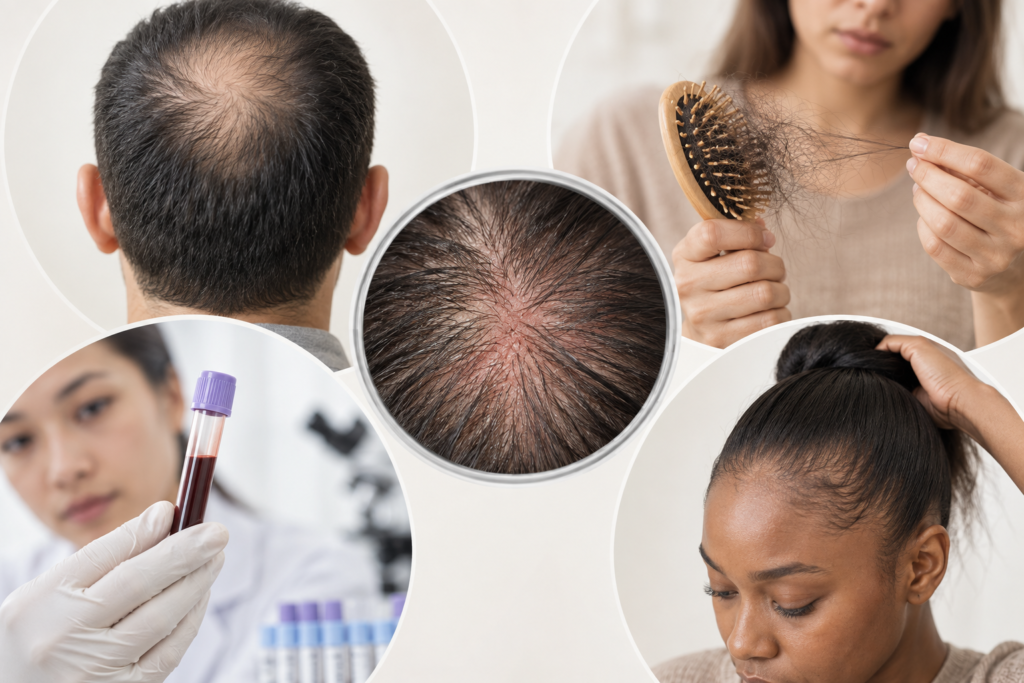
Hair loss can have several causes, and each may require a different approach.
Why a Hair and Scalp Evaluation Comes First
Two people can have similar thinning and need very different treatments. A consultation reviews the pattern and timing of loss, health history, medications, nutrition, styling, and scalp condition. Laboratory testing may also be appropriate. At ROG Medspa and Hair Institute, a professional high definition scalp analysis helps evaluate the scalp and follicles and creates a baseline for tracking progress.
Common Hair Growth and Restoration Therapies
1. Medication Therapy
Medication may slow progressive loss, support active follicles, or address a hormonal contributor.
Minoxidil is one of the most widely used treatments for pattern hair loss. The topical form may reduce shedding, stimulate growth, and help maintain existing hair. Oral minoxidil is prescribed off label for selected patients and requires medical supervision.
Finasteride reduces the conversion of testosterone into DHT and is FDA approved for male pattern hair loss. Dutasteride, also known as Avodart, blocks two forms of the 5 alpha reductase enzyme and may be considered off label.
For selected women with hormone related thinning, clinicians may consider antiandrogens such as spironolactone. The consultation handout also includes specialized options such as bicalutamide, clascoterone, and cetirizine. Their uses and evidence differ, and they are not appropriate for everyone. Pregnancy potential, health history, current medications, and side effects must be reviewed before prescription therapy. Results take time, require consistency, and may fade after treatment stops.
2. Platelet and Growth Factor Therapies
Platelet rich plasma, or PRP, uses a concentrated portion of the patient’s own blood and is injected into areas of thinning to support follicle activity. Platelet rich fibrin matrix, or PRFM, provides a supportive fibrin matrix for growth factor release. Platelet derived growth factor, or PDGF, therapies may also be included in regenerative plans for early thinning or ongoing support. The number and timing of sessions vary.
3. Microneedling and Fractional Radiofrequency
Microneedling creates controlled microchannels that may stimulate a healing response and can be paired with selected topical or regenerative treatments. Fractional radiofrequency combines microneedling with energy delivered below the scalp surface. Both require careful attention to scalp health and infection risk.
4. Low Level Laser Therapy
Low Level Laser Therapy, or LLLT, uses red or near infrared light to support follicle activity. It is noninvasive and may be used for hereditary thinning, maintenance, or recovery after transplantation. Consistent sessions over several months are usually needed.
Fractional CO2 laser or excimer light may have specific roles in selected scalp conditions. They are not interchangeable with LLLT.
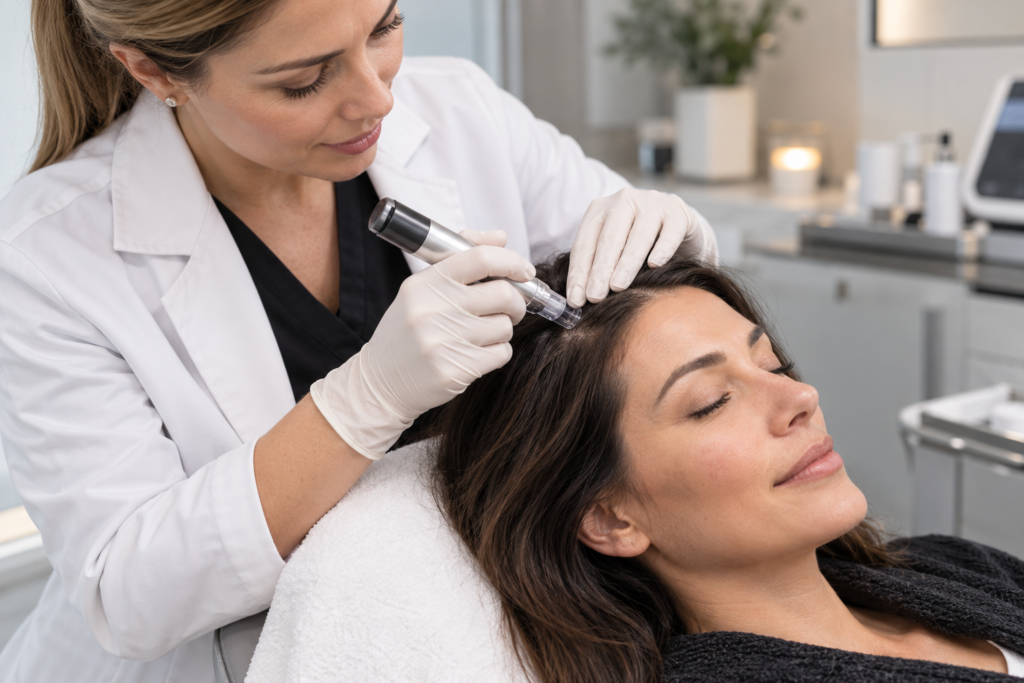
Regenerative and device based therapies may support active hair follicles as part of a personalized plan.
5. Hair Transplantation
When follicles no longer produce meaningful growth, surgery may offer a more permanent option. Follicular Unit Extraction, or FUE, removes individual follicular units for placement into thinning areas. Follicular Unit Transplantation, or FUT, removes a narrow strip of donor scalp that is divided into individual grafts. The best technique depends on donor hair, degree of loss, hairstyle, scarring considerations, and goals. Medical therapy may still help protect nontransplanted hair.
6. Emerging Regenerative Options
Exosome and stem cell based approaches are being studied, but they should not be presented as established or guaranteed treatments. The FDA states that there are currently no FDA approved exosome products. Patients considering an emerging biologic therapy should receive clear information about its evidence, regulatory status, risks, and alternatives.
Why Combination Therapy Is Often Recommended
Hair loss rarely has a universal solution. A personalized plan may combine medication to slow loss, regenerative treatment to support active follicles, LLLT for ongoing stimulation, and transplantation where coverage is needed. The right combination considers the diagnosis, safety, convenience, cost, and maintenance.
When Should You Seek a Hair Loss Consultation?
Consider an evaluation if you notice:
- A widening part or receding hairline
- Increased shedding that continues for several weeks
- A thinner ponytail or reduced density
- Round or irregular bald patches
- Scalp itching, redness, pain, scaling, or scarring
- Hair loss after illness, childbirth, rapid weight loss, or a medication change
Early evaluation matters because treatments generally work best while follicles are still active.

The right treatment plan begins with understanding the cause and stage of hair loss.
Start With the Cause, Then Build the Plan
Hair restoration is not about choosing the most talked about treatment. It is about matching the plan to your scalp, follicles, health, and goals. At ROG Medspa and Hair Institute in Houston, TX, our team offers high definition scalp analysis and personalized options that may include medication, regenerative therapies, Low Level Laser Therapy, and surgical restoration. Schedule a consultation to learn which approach may be right for you.
Individual results vary. This article is for general educational purposes and does not replace diagnosis or treatment by a qualified healthcare professional. Some therapies discussed are used off label or remain investigational. A consultation is required to review suitability, risks, benefits, and alternatives.
References
- American Academy of Dermatology: Hair loss causes. Available at: https://www.aad.org/public/diseases/hair-loss/causes/18-causes
- American Academy of Dermatology: Hair loss diagnosis and treatment. Available at: https://www.aad.org/public/diseases/hair-loss/treatment/diagnosis-treat
FDA: Public Safety Notification on Exosome Products. Available at: https://www.fda.gov/vaccines-blood-biologics/safety-availability-biologics/public-safety-notification-exosome-products
- ROG Medspa: Regenerative Hair Growth in Houston, TX. Available at: https://rogmedspa.com/services/regenerative-hair-growth-houston-tx/
FAQs
Some temporary shedding, such as telogen effluvium after illness, childbirth, or stress, may improve after the trigger resolves. Genetic or scarring hair loss usually requires treatment, and scarring can become permanent. An evaluation can help identify which type is present.
There is no single best treatment. Medication, platelet or growth factor therapy, LLLT, microneedling, and transplantation address different needs. The best plan depends on the cause and stage of loss.
Most therapies require several months before changes can be judged. Photos and scalp analysis can track progress more accurately than day-to-day observation.
Transplanted follicles are generally selected from areas that are more resistant to pattern loss and can provide long-lasting growth. Natural hair outside the transplant area may continue to thin, so maintenance treatment can still be important.
No. The FDA states that there are currently no FDA approved exosome products. Patients should discuss the regulatory status, evidence, risks, and alternatives before considering an exosome-based treatment.